The Quiet Building: How Architectural Restraint Produces the Most Enduring Spaces
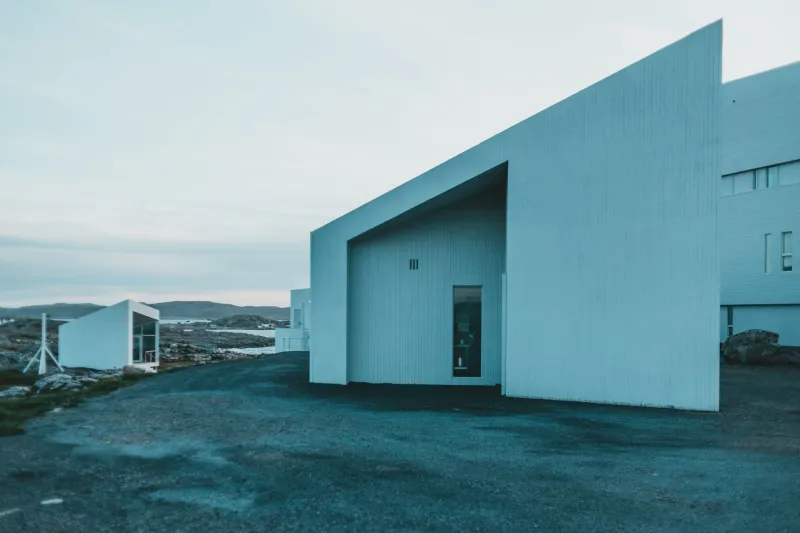
The Ambition to Disappear
There is a particular kind of courage in designing something that does not insist on being seen. American architecture has, for much of its history, operated under a different assumption: that a building earns its place by announcing it. From the monumental civic facades of Washington, D.C., to the glass towers of Chicago's Loop, the prevailing language has been one of assertion—of structure and material deployed to declare permanence, authority, and scale.
Yet some of the most quietly influential spaces built in recent decades have pursued the opposite logic. They recede. They defer. They make themselves smaller in order to make the world around them feel larger. And in doing so, they achieve something that sheer presence rarely can: they become genuinely memorable.
This is not minimalism in the decorative sense—the stripped-down aesthetic that became a shorthand for luxury in the 1990s and has never entirely left us. It is something more intentional and more philosophically demanding. It is the architecture of disappearing: a practice in which buildings actively negotiate their own visual weight, subordinating their form to the life that unfolds within and around them.
Presence Through Absence
To understand why this approach is so powerful, it helps to consider what most buildings are actually competing with. In any urban or suburban context, a structure exists within a field of relationships—to the street, to adjacent buildings, to the sky, to the people moving through and past it. When a building dominates that field, it simplifies it. The surrounding relationships collapse into a single focal point, and the richness of the environment is reduced.
When a building steps back, the field remains complex. The street retains its character. Adjacent structures are allowed their own voice. The sky becomes visible in new ways. And the person moving through that environment becomes the central actor rather than a spectator to someone else's architectural statement.
This is the paradox at the heart of restraint: by diminishing itself, a building can elevate everything around it, including the human beings it was built to serve. The space becomes, in the truest sense, generous.
Toyo Ito has long understood this dynamic. His work consistently interrogates the boundary between structure and environment, seeking moments where the building becomes permeable—where it begins to dissolve into light, landscape, and air rather than asserting a hard boundary against them. The Sendai Mediatheque, with its forest of hollow tube-columns and its translucent glass skin, does not so much stand in its urban context as breathe within it. The building is present, certainly, but it holds its presence lightly.
Materiality as Modesty
One of the primary instruments through which buildings diminish their own visual weight is material selection. The choice of what a surface is made of—and how it behaves in changing light—determines whether a building reads as solid or porous, heavy or weightless, fixed or in motion.
Corten steel that oxidizes to match the surrounding earth. Weathered timber that grays into the color of overcast sky. Glass that reflects the treeline rather than the interior it encloses. These are not merely aesthetic choices; they are relational ones. They represent a decision to make the building answerable to its context rather than independent of it.
In the American Pacific Northwest, several residential and civic projects have adopted this vocabulary with notable success. Buildings clad in materials that shift with the seasons—darkening in rain, lightening in sun—resist the fixed identity that most architecture strives for. They become, in a sense, alive to their environment. They are harder to photograph cleanly, harder to reduce to a single iconic image, and for precisely that reason, they are more fully experienced in person.
This resistance to easy representation is itself significant. Buildings designed to photograph well are, implicitly, designed for a kind of absence—for consumption at a distance, mediated through a screen. Buildings designed to be experienced are designed for presence, for the body moving through space, for the changing quality of afternoon light across a surface.
Color, Scale, and the Art of Not Shouting
Beyond material, color functions as one of the most underappreciated tools in the architecture of restraint. In the United States, commercial and residential design alike has tended toward colors that assert: high-contrast facades, bold accent walls, the kind of palette that reads clearly from a moving vehicle.
The alternative is not invisibility but attunement. Buildings colored to harmonize with their surroundings—warm grays that echo limestone, muted greens that reference the meadow behind them, off-whites that pick up the particular quality of regional light—do not disappear so much as belong. They communicate a different set of values: attentiveness, humility, a willingness to be part of a larger composition rather than the composition itself.
Scale operates similarly. A building can be physically large and still feel modest if its mass is broken down, its edges softened, its roofline kept below the treeline. Conversely, a small building can feel overwhelming if it refuses to acknowledge anything around it. The question is not how much space a structure occupies but how it negotiates that occupation—whether it takes or gives, whether it crowds or opens.
What Surrounds Them Is the Point
Perhaps the most useful way to understand buildings that know when to step back is to consider what they are actually designed around. The conventional approach to architectural design begins with the building: its program, its form, its presence in space. The restrained approach begins elsewhere—with the courtyard that will catch morning light, the view corridor that will frame a distant hillside, the street edge that will invite pedestrians to linger.
In this framework, the building is not the subject of the design. It is the instrument through which the real subjects—light, landscape, human movement, social connection—are given form. The architecture exists in service of something beyond itself.
This is a demanding discipline. It requires designers to subordinate their own formal ambitions to the requirements of a context, to resist the temptation to impose a strong idea when a quiet one would serve better. It asks clients to value what is not there as much as what is. And it asks observers to look past the building itself to understand what the building has made possible.
The results, when the discipline holds, are spaces that feel inexplicably right—places where you are not quite sure why you feel comfortable, why the light seems particularly good, why you are inclined to stay. The building has done its work so well that it has made itself invisible. And in that invisibility, it has achieved something no amount of presence could: it has made the life within it feel entirely its own.
The Courage of Stepping Back
To design a building that knows when to disappear is to make a wager against the most basic instincts of the profession. Architecture has always been, in part, about legacy—about leaving a mark, about structures that outlast their makers and speak across time. The architecture of restraint does not abandon that ambition; it redirects it.
The mark it leaves is not in the building's surface but in the quality of the life it enables. It is measured not in photographs but in experiences, not in facades but in the spaces between them. It is, in the end, a more difficult thing to achieve—and, for that reason, a more honest measure of what architecture can do at its best.