Pause as Architecture: Redesigning the Spaces Where We Wait
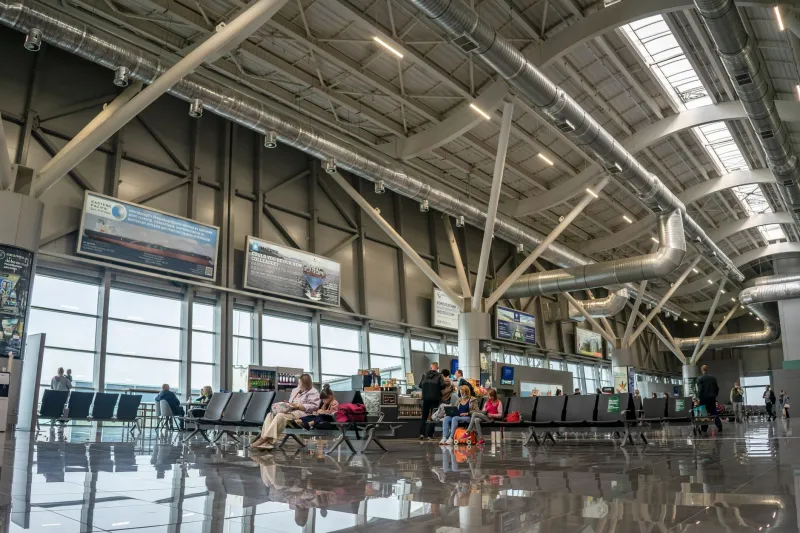
America does not wait well. The cultural instinct is to fill every interval—to scroll, to stream, to schedule the next thing before the current one has concluded. And yet the built environment generates waiting at extraordinary scale. Hospital corridors, airport terminals, DMV lobbies, bus shelters, train platforms: these are not marginal spaces. They are, in aggregate, among the most inhabited places in contemporary life. The question is not whether people will wait. The question is what kind of architecture greets them when they do.
Most of it, frankly, offers very little.
The Design Debt of Transitional Space
There is a long-standing tendency in architectural practice to treat waiting areas as residual—whatever square footage remains after the programmatic priorities have been satisfied. The hospital waiting room earns its place only after the operating suites, the imaging centers, and the administrative offices have claimed their allocations. The airport gate lounge is subordinate to the retail concourse. The train platform is an afterthought to the tracks.
This hierarchy communicates something to the people who occupy these spaces: your time here is incidental. You are between things that matter.
The psychological cost is measurable. Research on perceived wait duration consistently demonstrates that environmental quality shapes how long a wait feels. Spaces with natural light, visual complexity, acoustic comfort, and a sense of spatial generosity cause people to underestimate elapsed time. Spaces that are fluorescent-lit, acoustically harsh, and spatially compressed do the opposite. Anxiety compounds. Minor discomforts become grievances. The institution that owns the space—whether a hospital network, a transit authority, or a government agency—absorbs reputational damage that originates not in its services but in its architecture.
The design debt of transitional space is real, and American institutions are carrying a great deal of it.
What Japanese Architecture Understood First
In Japanese spatial philosophy, the concept of ma describes a quality of meaningful interval—a pause that is not empty but charged with potential. Ma is the silence between musical notes that gives melody its shape, the gap between structural columns that defines a threshold, the moment of stillness in a tea ceremony that concentrates attention before the next gesture. It is not the absence of something. It is the presence of a particular kind of time.
This concept has deep architectural implications. In traditional Japanese design, transitional spaces—the engawa, the genkan, the roji garden path leading to a teahouse—were understood as experiences in their own right, not merely passages from one room to another. The approach to the destination was considered as carefully as the destination itself. The journey through a space was expected to prepare the occupant: to quiet the mind, to shift attention, to make arrival feel earned.
American architecture has rarely thought in these terms. The lobby of a corporate tower is designed to project institutional power, not to ease the transition from street to office. The hospital waiting room is designed for durability and easy maintenance, not for the emotional state of someone awaiting a diagnosis. The airport gate is designed for retail throughput, not for the particular vulnerability of a traveler about to leave the ground.
The contrast is instructive. It reveals that the quality of waiting is always a design choice—and that choosing poorly is itself a form of design.
Spaces That Have Gotten It Right
There are exceptions worth studying. The Kimbell Art Museum in Fort Worth, designed by Louis Kahn, is not a waiting space in any conventional sense, but its vaulted galleries create a quality of suspended time that visitors consistently describe as calming and clarifying. The natural light that cycles through Kahn's cycloid shells changes character across the day, making time visible without making it oppressive. People slow down without being asked.
More directly relevant: the international terminal at Changi Airport in Singapore has become a global benchmark precisely because it treats waiting as an experience worth designing. Its indoor waterfall, its butterfly garden, its abundance of natural light and living plant material—these are not amenities bolted onto a functional container. They are the architecture. They represent a conviction that people in transit deserve more than a place to stand.
In the United States, certain transit projects have begun to reflect similar ambitions. The Fulton Center in Lower Manhattan, completed in 2014, uses an oculus skylight and a reflective interior surface to bring daylight deep into a subway concourse that was previously characterized by the grim compression typical of underground infrastructure. The effect is not merely aesthetic. Riders report the space as less stressful than comparable stations, a finding that aligns with extensive research on the cognitive benefits of daylight access in subterranean environments.
These projects share a common premise: that the person waiting is not a problem to be managed but an experience to be served.
The Elements of a Dignified Wait
What, specifically, does good waiting-space design require? Several principles emerge from practice and from research.
Light that moves. Static artificial illumination flattens time. Natural light, or dynamic artificial light that mimics the arc of the day, gives occupants a subliminal sense of temporal passage that reduces the feeling of suspension. People tolerate waiting better when they can feel time moving.
Acoustic consideration. Hard surfaces and open volumes amplify ambient noise, which raises cortisol levels and increases perceived stress. Acoustic design in waiting spaces—through material selection, surface geometry, and volume management—is not a luxury. It is a health intervention.
Prospect and refuge. Environmental psychology identifies a fundamental human preference for spaces that offer both an open view (prospect) and a degree of enclosure (refuge). Waiting areas that provide only one or the other—the exposed plastic chair in the center of a vast terminal, the windowless alcove of a medical office—fail to satisfy this deep spatial need. Seating arrangements that offer partial enclosure while preserving sightlines to the broader space address both.
Material honesty. Spaces designed with genuine materials—wood, stone, concrete with texture, glass with depth—communicate care in a way that vinyl composite tile and drop ceilings do not. The message of materials is absorbed below conscious attention, but it shapes the emotional register of the experience.
Temporal anchoring. Art, changing exhibitions, living plants, water features: elements that shift over time give waiting spaces a quality of aliveness that static environments lack. They provide something to attend to, which is the most effective antidote to the experience of waiting.
An Argument for Seriousness
The architecture of waiting is, at its core, an argument about what we believe people deserve. When a hospital system invests in a well-designed waiting area, it is making a claim about the dignity of its patients. When a transit authority builds a station with natural light and acoustic care, it is asserting that the daily commuter is worth considering. When an airport terminal offers genuine spatial generosity, it is acknowledging that travel involves vulnerability and that architecture can either compound or alleviate it.
These are not sentimental positions. They are practical ones. Spaces that honor the human experience of waiting reduce conflict, improve institutional perception, and—in healthcare settings particularly—demonstrably affect patient outcomes.
The interval between arrival and destination is not dead time. It is inhabited time, and inhabited time deserves architecture commensurate with its importance. Building well for the pause is not a secondary concern for designers willing to move beyond the programmatic. It may, in fact, be where the most consequential work remains to be done.