The Discipline of Emptiness: How Japanese Spatial Philosophy Is Calming the American Interior
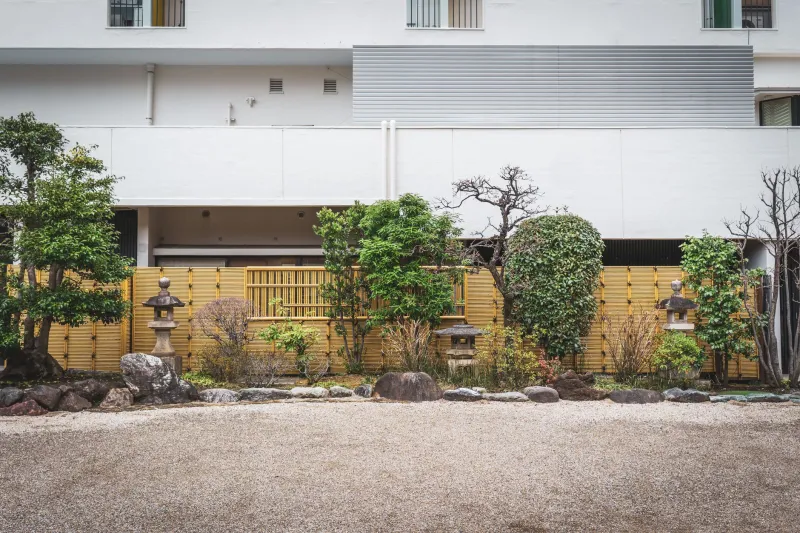
There is a word in Japanese — ma — that has no precise English equivalent, and that difficulty of translation is itself instructive. It refers to the quality of negative space: not emptiness as absence, but emptiness as presence. A pause in music. The gap between two stones in a garden path. The unoccupied center of a room that somehow organizes everything around it. In Japanese spatial thinking, ma is not what remains after design decisions have been made. It is itself a design decision — perhaps the most important one.
Across the United States, a growing number of residential and commercial projects are drawing on this principle as a counterweight to the visual and sensory overload that characterizes much of contemporary American life. The results are measurable in ways that extend well beyond aesthetics.
The Overstimulation Problem
American interiors, in both residential and commercial contexts, have long operated on an additive logic: more features, more surfaces, more options, more stimulation. This tendency reflects broader cultural values around abundance and choice, but its spatial consequences are significant. Environments saturated with visual information — layered textiles, crowded shelving, competing focal points, screens integrated into every surface — place a continuous cognitive load on their occupants.
Neuroscientific research has documented what many people experience intuitively: environments with high levels of visual complexity elevate stress markers, impair sustained attention, and reduce the capacity for restorative rest. The brain, confronted with an excess of competing stimuli, cannot fully disengage. The result is a kind of low-grade exhaustion that accumulates across hours and days without ever resolving into genuine recovery.
This is the condition that Japanese garden principles, and the broader spatial philosophy from which they emerge, are uniquely equipped to address.
What the Garden Teaches
The traditional Japanese garden is a masterwork of strategic restraint. Every element — a moss-covered stone, a raked gravel field, a carefully pruned pine — is placed in deliberate relationship to what surrounds it, including the surrounding emptiness. Nothing is incidental. But equally, nothing is crowded. The garden teaches the eye to rest, to move slowly, to find meaning in intervals rather than accumulations.
This philosophy translates directly into interior architecture when applied with genuine understanding rather than superficial borrowing. Several US-based projects offer instructive examples.
A residential project in the Pacific Northwest — a home designed for a family seeking relief from demanding professional lives — organized its primary living spaces around a single, unadorned interior courtyard visible through floor-to-ceiling glazing. The courtyard contained only gravel, a single weathered stone, and a dwarf Japanese maple. No furniture, no art, no ornament. Its sole function was to exist as a visual anchor — a place of absolute stillness at the center of an active household. Occupants reported a measurable shift in their experience of the home's interior: the presence of the courtyard seemed to reduce the psychological temperature of the surrounding rooms, making them feel quieter even when they were not acoustically so.
A corporate wellness facility in Chicago applied similar principles to its meditation and focus areas, replacing the conventional approach — diffused lighting, neutral finishes, generic tranquility — with a more rigorous spatial composition. Rooms were stripped of all non-essential elements. Ceiling heights were calibrated to produce a specific quality of enclosure. A single aperture in each room framed a curated exterior view. Staff and clients using these spaces consistently reported deeper states of concentration and more effective recovery from cognitive fatigue.
Restraint as a Design Discipline
Implementing ma in American contexts requires confronting a design culture that is deeply uncomfortable with emptiness. The instinct — among clients, and sometimes among designers — is to fill. A bare wall reads as unfinished. An open floor area suggests inadequate furnishing. The discipline of restraint must be actively cultivated and defended against the pressure to add.
This is where the philosophical underpinning of Japanese spatial design becomes practically important. Ma is not minimalism in the Western sense — a stylistic preference for clean lines and neutral palettes. It is a considered position about the relationship between space and human experience. Empty space, in this framework, is not passive. It is charged. It creates the conditions for perception, for attention, for a quality of presence that dense, stimulating environments actively preclude.
For American architects and interior designers working with clients who are genuinely suffering from overstimulation, communicating this distinction is often the central challenge. The goal is not a space that looks restrained. It is a space that functions as a restorative environment — one that the nervous system can inhabit without effort.
Integration Without Appropriation
It is worth noting that the application of Japanese spatial principles in American contexts carries a responsibility to engage thoughtfully rather than extractively. The risk of surface-level borrowing — the deployment of shoji screens and raked gravel as aesthetic signifiers without genuine engagement with the underlying philosophy — produces spaces that look the part without delivering the experience.
The most successful integrations tend to be those where the core principles — deliberate restraint, the cultivation of ma, the prioritization of experiential quality over visual complexity — are translated into locally appropriate forms rather than literally replicated. A home in Vermont can embody the philosophy of ma through the quality of its relationship to a birch forest, without a single element of Japanese visual vocabulary. The principle is transferable. The forms must be responsive to their own place and context.
What these principles offer American design — at a moment when anxiety, distraction, and overstimulation are recognized as genuine public health concerns — is not a foreign aesthetic but a spatial intelligence that has been refined over centuries. The discipline of emptiness, practiced with intention, is one of architecture's most powerful tools for restoring the quality of human experience within the built environment.