The Workplace Against the Body: How Spatial Design Became a Public Health Issue
A Space Designed to Extract, Not to Sustain
Let us be direct about what the conventional American office has, for the better part of a century, been optimized to do. It has been optimized for supervision, for the efficient arrangement of workstations, and for the maximum occupation of rentable square footage. What it has rarely been optimized for is the human being who must spend eight or more hours inside it.
The consequences of this priority inversion are now well documented. Chronic exposure to fluorescent lighting, the absence of meaningful views, acoustically unmanaged open-plan floors, and the near-total elimination of natural materials from the workplace environment are not merely aesthetic inconveniences. They are, the evidence increasingly suggests, significant contributors to the epidemic of workplace disengagement, cognitive fatigue, and stress-related illness that costs American businesses an estimated three hundred billion dollars annually in lost productivity.
Architects have been raising this alarm for years. The post-pandemic return-to-office moment has, at last, given the argument institutional traction.
What the Body Knows That the Spreadsheet Doesn't
To understand why conventional office design fails so consistently, it helps to consider what the human nervous system actually requires in order to function at a high level over sustained periods.
The body regulates itself, in part, through environmental cues. Natural light calibrates the circadian rhythm, governing alertness, mood, and the quality of sleep that follows a workday. The presence of organic materials—wood, stone, living plants—activates the parasympathetic nervous system, moderating the stress response. Views of outdoor space, even through a window, provide the visual cortex with the long-distance focal opportunities it needs to recover from the close, screen-bound work that defines most contemporary knowledge labor.
The standard office denies the body nearly all of these inputs. Sealed windows eliminate variable natural light and the sensory presence of outdoor air. Suspended acoustic tile ceilings and synthetic carpet suppress the textural richness that makes environments feel habitable rather than institutional. Uniform artificial lighting—calibrated for neither the time of day nor the nature of the task—flattens the spatial experience into a condition of perpetual, undifferentiated activation.
The body, denied its regulatory cues, compensates with stress. Over time, that stress accumulates.
The Pandemic as Architectural Revelation
The forced experiment of remote work that began in March 2020 produced, among its many consequences, a mass revelation about the relationship between environment and performance. Millions of American workers discovered that a spare bedroom or a kitchen table—however imperfect as a professional workspace—could, under certain conditions, outperform the open-plan office they had abandoned.
The reason, in many cases, was not the quality of the home workspace itself. It was the incidental environmental qualities that accompanied it: the window at eye level, the ability to step outside between calls, the absence of the relentless ambient noise of a crowded floor, the capacity to control light and temperature according to personal preference.
When employers began mandating returns, they encountered a workforce that had, often without fully articulating it, developed an experiential baseline for what a tolerable working environment felt like. The office, measured against that baseline, frequently came up short.
The more perceptive organizational leaders recognized this not as a problem of employee attitude but as a problem of architectural quality—one that required a design response.
Principles of the Workplace Reimagined
Architects working on next-generation workplace projects are drawing on a set of principles that, while not entirely new, are now being applied with a seriousness and a budget that earlier decades rarely permitted.
Daylighting as infrastructure. The most consequential decision in workplace design may be the orientation and fenestration of the building envelope. Projects that position primary work areas along perimeter glazing—maximizing access to direct and indirect natural light—consistently outperform interior configurations on every measure of occupant satisfaction. In retrofit situations, where perimeter access is limited, architects are introducing light wells, skylights, and high-reflectance surface treatments to distribute daylight deeper into the floor plate.
Material honesty and sensory richness. The replacement of synthetic surface materials with wood, exposed concrete, stone, and natural textiles is not a stylistic preference but a physiological one. Research in environmental psychology consistently demonstrates that environments composed of natural materials are perceived as less stressful and more restorative than their synthetic counterparts. Several corporate campus projects completed in the last five years—including notable examples in Seattle and the Research Triangle in North Carolina—have made material authenticity a foundational design requirement.
Acoustic differentiation. The fully open office plan, conceived as a tool for collaboration, has proven to be one of the most effective instruments for the destruction of concentrated thought ever introduced into the professional environment. Contemporary workplace design responds by creating a genuine spectrum of acoustic conditions: fully enclosed focus rooms, semi-enclosed collaboration zones with sound-absorbing surfaces, and open social areas where ambient noise is expected and appropriate. The goal is not silence but choice—the capacity for an individual to select an environment suited to the cognitive demands of the task at hand.
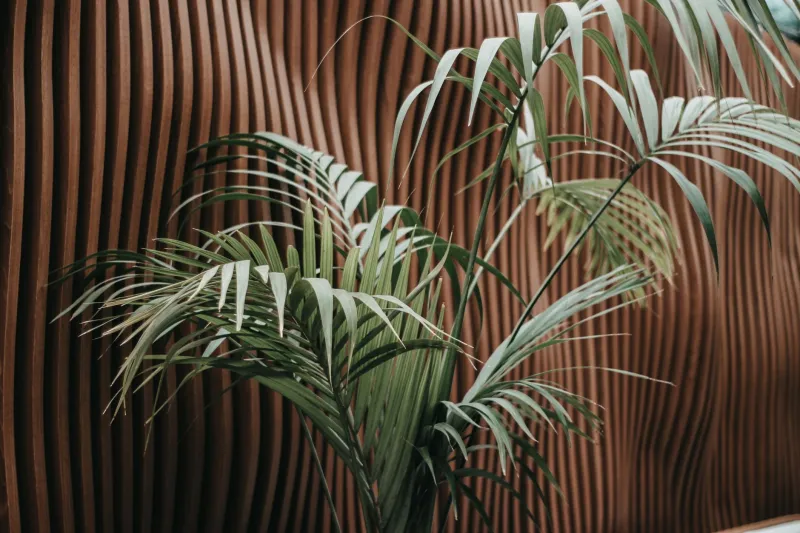
Integration of living systems. Biophilic design—the incorporation of living plants, water features, and views of natural landscape into the built environment—has moved from a niche wellness concept to a mainstream workplace strategy. Planted walls, interior courtyards, and rooftop gardens are now standard program elements in high-performance office projects, valued not only for their aesthetic contribution but for their measurable effects on air quality, humidity regulation, and occupant stress levels.
What Business Leaders Can Do Now
The architectural transformation of the American workplace is underway, but it is proceeding unevenly. Organizations with long-term leases in poorly designed buildings, or with limited capital budgets, may find comprehensive redesign impractical in the near term. There are, however, meaningful interventions available at every scale of investment.
At the most immediate level, the replacement of fluorescent tube lighting with tunable LED systems—capable of shifting color temperature and intensity across the course of the day—can materially improve occupant alertness and mood at relatively modest cost. The introduction of live plants at workstation scale, while insufficient on its own, contributes to the sensory richness of an environment in ways that occupants consistently notice and value.
For organizations undertaking lease renewals or fit-out projects, the single most valuable commitment is to prioritize perimeter access for primary work areas, and to resist the temptation to maximize desk count at the expense of spatial quality. The evidence that a well-designed workplace returns its investment through reduced turnover, improved performance, and lower absenteeism is now sufficiently robust to constitute a business case, not merely a design aspiration.
Architecture as an Act of Respect
There is, underlying all of these specific interventions, a more fundamental shift in orientation that the best contemporary workplace architects are advocating. It is the shift from conceiving the office as a machine for producing output to conceiving it as an environment for sustaining human beings.
This is not a sentimental position. It is a practical one, grounded in an understanding that the quality of the space in which people work is inseparable from the quality of the work they produce. When an organization invests in an environment that acknowledges the body's need for light, for natural material, for acoustic relief, and for the restorative presence of living things, it is not indulging its workforce. It is making a reasoned commitment to the conditions under which human intelligence actually flourishes.
The workplace, at its best, is not a backdrop for labor. It is a spatial argument about what the organization believes its people are worth.