From Tokyo to Times Square: How Japanese Design Thinking Is Quietly Transforming American Cities
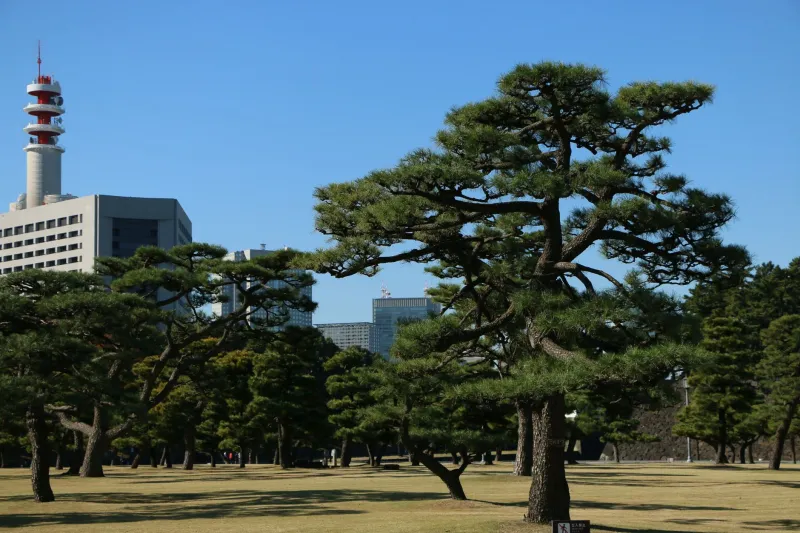
There is a particular quality to walking through a well-designed Japanese city—a sense of calm deliberateness, of space used not merely for function but for feeling. Streets breathe. Buildings step back from one another with considered intention. Nature is not an afterthought but a participant in the architectural conversation. For much of the twentieth century, American urban design moved in an almost opposite direction: bigger, denser, louder, faster. Yet something is shifting. Across the United States, a growing cohort of architects, planners, and developers is looking eastward for guidance—and the results are beginning to show.
The Concept of Ma: Giving Space Room to Breathe
At the heart of Japanese spatial philosophy lies ma (間)—a term that defies simple translation but is often rendered as "negative space" or "the pause between." Unlike the Western tendency to view empty space as wasted opportunity, ma treats the void as an active element, as essential to the composition as any wall, column, or roofline. It is the silence between musical notes, the gap in a garden path that invites contemplation before the next step.
American urban designers are beginning to internalize this idea in ways that are both subtle and transformative. The High Line in New York City, while conceived through a distinctly local lens, embodies a ma-adjacent sensibility: a linear corridor of deliberate restraint, where the absence of commercial clutter allows visitors to experience the city at a different register. More explicitly, firms such as Kengo Kuma & Associates—whose work has expanded significantly into the American market—have introduced projects where negative space is treated as a primary design material rather than a residual condition.
In Seattle, the renovation of certain public plazas near the waterfront has incorporated extended pauses in programming: benches oriented toward water views rather than retail frontage, plantings that screen rather than showcase, and paving patterns that slow pedestrian movement rather than accelerate it. These are not accidents. They are the product of designers who have studied how ma functions in traditional Japanese urban fabric and have asked what its equivalent might look like in a Pacific Northwest context.
Minimalism as Municipal Policy
Beyond individual projects, Japanese minimalism—the discipline of reduction, of achieving maximum effect through minimum means—is influencing the policy frameworks that govern American urban development. Cities including Portland, Oregon, and Austin, Texas, have begun revising zoning codes to permit smaller, more refined residential structures that prioritize quality of construction and relationship to landscape over sheer square footage.
This shift is partly economic. As land costs rise in major metropolitan areas, the American dream of the large suburban home becomes increasingly inaccessible. But it is also philosophical. A younger generation of homeowners and renters is demonstrating a preference for spaces that feel considered rather than capacious—rooms where every element earns its place, where light is treated as a design material, and where the boundary between interior and exterior is deliberately blurred.
Japanese residential architecture has long navigated the challenge of limited space with extraordinary sophistication. The engawa—a transitional veranda space that mediates between the interior of a home and the garden—has no precise American equivalent, yet its logic is appearing in contemporary American residential design as covered outdoor rooms, retractable glass walls, and landscape-integrated terraces. The underlying principle is the same: the interior and the exterior are not opposites but partners.
Harmony With Nature: Biophilic Design Finds Its Philosophical Roots
The term "biophilic design"—the practice of integrating natural elements into built environments to support human wellbeing—has become something of a buzzword in American architectural circles. Living walls, rooftop gardens, and timber-framed interiors are appearing in office buildings, hospitals, and schools with increasing frequency. What is less often acknowledged is that biophilic design, as a philosophy, owes a profound debt to Japanese aesthetic tradition.
The concept of satoyama—a landscape zone between mountain wilderness and cultivated farmland—captures a distinctly Japanese understanding of humanity's place within nature: neither dominant nor subservient, but in active, reciprocal relationship. This worldview has shaped Japanese architecture for centuries, from the rock gardens of Kyoto's Ryoanji temple to the forest-embedded buildings of contemporary architects like Toyo Ito, whose work consistently interrogates the boundary between structure and landscape.
In the United States, this philosophy is finding expression in projects that go beyond decorative greenery. The Bullitt Center in Seattle—often cited as one of the greenest commercial buildings in the world—incorporates not merely energy systems but a fundamental rethinking of how a building participates in its ecosystem. Rainwater is harvested, composted waste returns to the soil, and the building's materials are selected with their eventual decomposition in mind. This is not merely sustainability as engineering; it is sustainability as philosophy, and its intellectual lineage runs through Japanese design thinking as much as through Western environmental science.
The Developer's Calculus: Why American Real Estate Is Paying Attention
For all its philosophical richness, the influence of Japanese design principles on American urbanism would remain marginal if it were not also proving commercially viable. And increasingly, it is. Research from the Urban Land Institute and various academic institutions has demonstrated that developments incorporating principles of spatial restraint, natural integration, and pedestrian-oriented design command premium rents and higher buyer interest compared to conventional alternatives.
Developers in cities such as San Francisco, Chicago, and Washington, D.C., are commissioning architects to design mixed-use projects that draw explicitly from Japanese precedent—not as pastiche or cultural appropriation, but as genuine engagement with design strategies that have been refined over centuries. The results tend to share certain qualities: a careful attention to threshold and transition, a respect for the existing landscape, and an understanding that what is left out of a design is as important as what is included.
A Design Conversation Without Borders
It would be a mistake to frame this as a one-directional transfer of ideas from Japan to America. The most interesting work happening at this intersection is genuinely dialogic—American architects visiting Japanese cities and returning with new questions rather than ready-made answers, Japanese firms designing for American contexts and discovering new constraints that push their practice in unexpected directions.
What Japanese design philosophy offers the American built environment is not a template but a disposition: a willingness to treat space as something to be experienced rather than merely occupied, to regard nature as a collaborator rather than a backdrop, and to understand that the quality of emptiness is as worthy of architectural attention as the quality of mass. As American cities grapple with questions of density, sustainability, and social cohesion, these are not merely aesthetic preferences. They are, increasingly, practical necessities.
The cities that will thrive in the coming decades will be those that learn to do more with less—more life, more connection, more meaning—from fewer resources and smaller footprints. In that endeavor, the wisdom embedded in Japanese spatial thinking is not a foreign import. It is, perhaps, exactly what American urbanism has been searching for.