What Buildings Remember: The Emotional Life of Architectural Materials
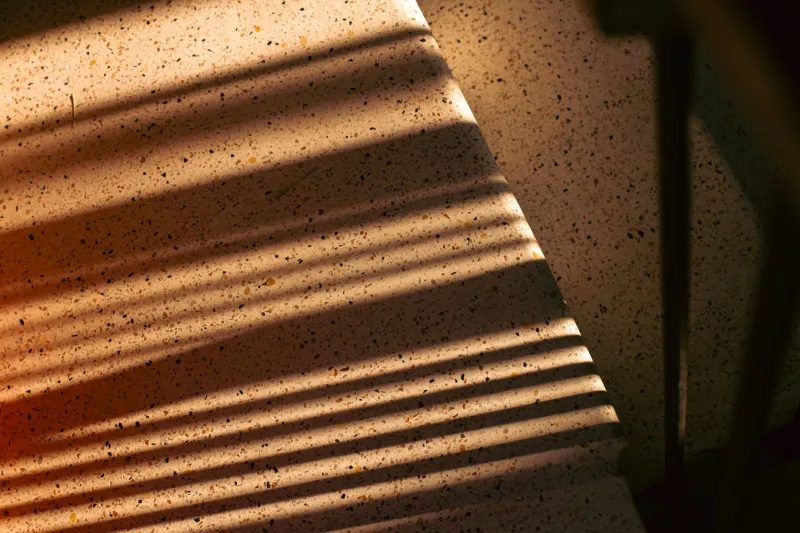
There is a particular quality of stillness that settles over a room built with honest materials. You may not immediately identify the source of that calm — it is not the furniture arrangement or the quality of afternoon light, though these certainly contribute. It is, more precisely, the sensation of surfaces that have been chosen with intention: a timber beam that has darkened with age, a stone threshold worn smooth by decades of footfall, a concrete wall whose pores seem to breathe with the rhythm of the house itself. These are not merely aesthetic choices. They are the architecture of memory.
In the United States, where residential construction has long favored speed, economy, and the visual spectacle of the newly finished, this idea of material depth — of choosing substances that accumulate meaning rather than resist it — remains underexplored. Yet it sits at the heart of a design philosophy that has quietly shaped some of the most quietly powerful spaces of our time.
Touch Before Sight
We tend to speak of architecture as a visual art, but this framing misses something fundamental. Before we assess the proportions of a room or the view from a window, our bodies have already begun to respond to texture. The roughness of a plaster wall beneath a fingertip, the slight give of cork flooring underfoot, the cool density of a granite countertop — these sensory exchanges happen faster than conscious thought, registering as comfort or unease, familiarity or estrangement.
Research in environmental psychology has consistently demonstrated that tactile experience shapes spatial memory more durably than visual impression alone. A room you remember vividly from childhood is rarely recalled in terms of its paint color. More likely, you remember the warmth of a wooden floor in summer, the cold shock of bathroom tile in winter, the particular roughness of a brick wall in a basement. Materials are the medium through which spaces become personal.
This is not sentiment. It is neuroscience applied to the built environment.
The Difference Between Aging and Deteriorating
One of the most consequential distinctions in material selection is the difference between a substance that ages and one that simply deteriorates. Many synthetic materials common in American residential construction — vinyl cladding, laminate surfaces, certain composite panels — begin their life looking their best and decline steadily from that point. There is no arc of deepening character, no patina, no record of habitation written into the surface.
Contrast this with the behavior of unfinished oak flooring, which accepts the traces of daily life — the scuff of a chair leg, the fading where sunlight falls — and becomes, over years, a document of the household it has sheltered. Or consider the way raw concrete develops a subtle topography as it responds to moisture and time, acquiring a history it did not possess on the day it was poured. Or the way copper, used for roofing or plumbing fixtures, oxidizes from bright metal into the muted green-grey of a surface that has witnessed decades of weather.
Materials that age well do not simply tolerate time — they collaborate with it. And in doing so, they invite the inhabitants of a space into a relationship that extends beyond ownership into something closer to stewardship.
Material Memory in American Domestic Life
Across the United States, there is a renewed appetite — particularly among homeowners undertaking renovations or custom builds — for materials that carry this quality of depth. The reclaimed wood movement, now well established from Brooklyn to Portland to Austin, is in part a response to the emotional flatness of new construction. When a homeowner installs a barn beam salvaged from a nineteenth-century Pennsylvania farmstead, they are not simply making a stylistic gesture toward rusticity. They are introducing into their home a material that already carries the weight of time, that arrives pre-laden with the suggestion of lives lived.
This instinct is sound, even if it is not always articulated in these terms. The desire for materials with history is a desire for spaces that feel inhabited before you have fully inhabited them — spaces that offer the comfort of continuity rather than the anxiety of the blank slate.
Yet reclamation is only one path. New materials, selected with equal care for their long-term behavior, can achieve the same effect. The question to ask of any material is not merely how it looks today, but what kind of witness it will make over the life of the building.
A Philosophy of Material Honesty
Central to a considered material philosophy is the principle of honesty — the idea that a material should be allowed to appear as what it is, rather than masquerading as something else. This stands in quiet opposition to much of the decorative tradition in American interiors, where wood-look vinyl, faux stone panels, and printed laminates have become ubiquitous. There is a certain efficiency to these substitutions, but they tend to produce spaces that feel, at some level the inhabitant may struggle to name, slightly unconvincing.
Honest materials — timber that reads as timber, stone that presents itself as stone, concrete that makes no apology for its industrial origins — create spaces with a legible logic. The inhabitant understands, at least instinctively, what the building is made of and how it was assembled. This legibility is a form of trust between a space and the person who lives within it.
It also creates the conditions for genuine memory formation. We form attachments to things we understand, and we understand spaces whose materials speak plainly about their nature and their history.
Selecting Materials for the Long Relationship
For American architects and homeowners approaching a building project, the implications are practical as well as philosophical. Material selection, when approached through this lens, shifts from a question of aesthetics — what looks best in the rendering — to a question of relationship: what will this surface become, and what will it ask of me?
Timber requires periodic attention, but rewards that attention with a surface that deepens and warms over decades. Polished concrete is demanding in its initial installation but becomes, once established, a floor that quietly records the life of the household. Natural stone, particularly in kitchens and bathrooms, is less forgiving of staining than its synthetic alternatives but offers a texture and variation that no manufactured product can replicate.
These are not simply premium choices. They are choices that invest in the emotional future of a space — that acknowledge the home not as a product to be consumed but as an environment to be inhabited, cared for, and gradually made one's own.
The most enduring spaces are those that make this collaboration possible. They are built of materials that do not merely resist time but accept it, accumulating in their surfaces the quiet evidence of a life well lived.